Why Trust Matters for AI-Enabled Employment Services in Argentina
It is one thing to develop artificial intelligence tools in a lab; it is another to deliver outcomes to people.
Earlier this year, the SkillLab team was on the ground in Argentina for a pilot project in partnership with the World Bank, the Undersecretariat of Labour and Vocational Training of Argentina, and the University of Chicago. Our mission was clear but ambitious: to bridge the gap between talent and opportunity for the beneficiaries of the Fomentar and Volver al Trabajo programs targeting more than 100,000 unemployed and informally employed jobseekers to receive job search support.
The pilot initiative focused on strengthening the effectiveness and operational efficiency of employment services in Argentina. The core objectives were:
- Closing jobseekers’ knowledge gaps: Providing jobseekers with information on their skills, relevant training courses, and possible careers.
- Linking jobseekers to opportunities: Connecting jobseekers to careers and courses through personalized, demand-driven recommendations.
- Creating a standardized tool: Developing a digital labor market intermediation tool that employment offices could use to engage and assist jobseekers.
We rolled out the Poné tus habilidades a trabajar tool—powered by our AI-powered Large Skill Model — to help people build skill profiles, generate job-ready CVs, and connect with training courses. This effort was accompanied by a randomized controlled trial (RCT) designed to generate concrete evidence on how AI empowers users to navigate a complex labor market. What we learned is that while the tool is powerful, the true impact comes from combining technology with trusted human guidance.
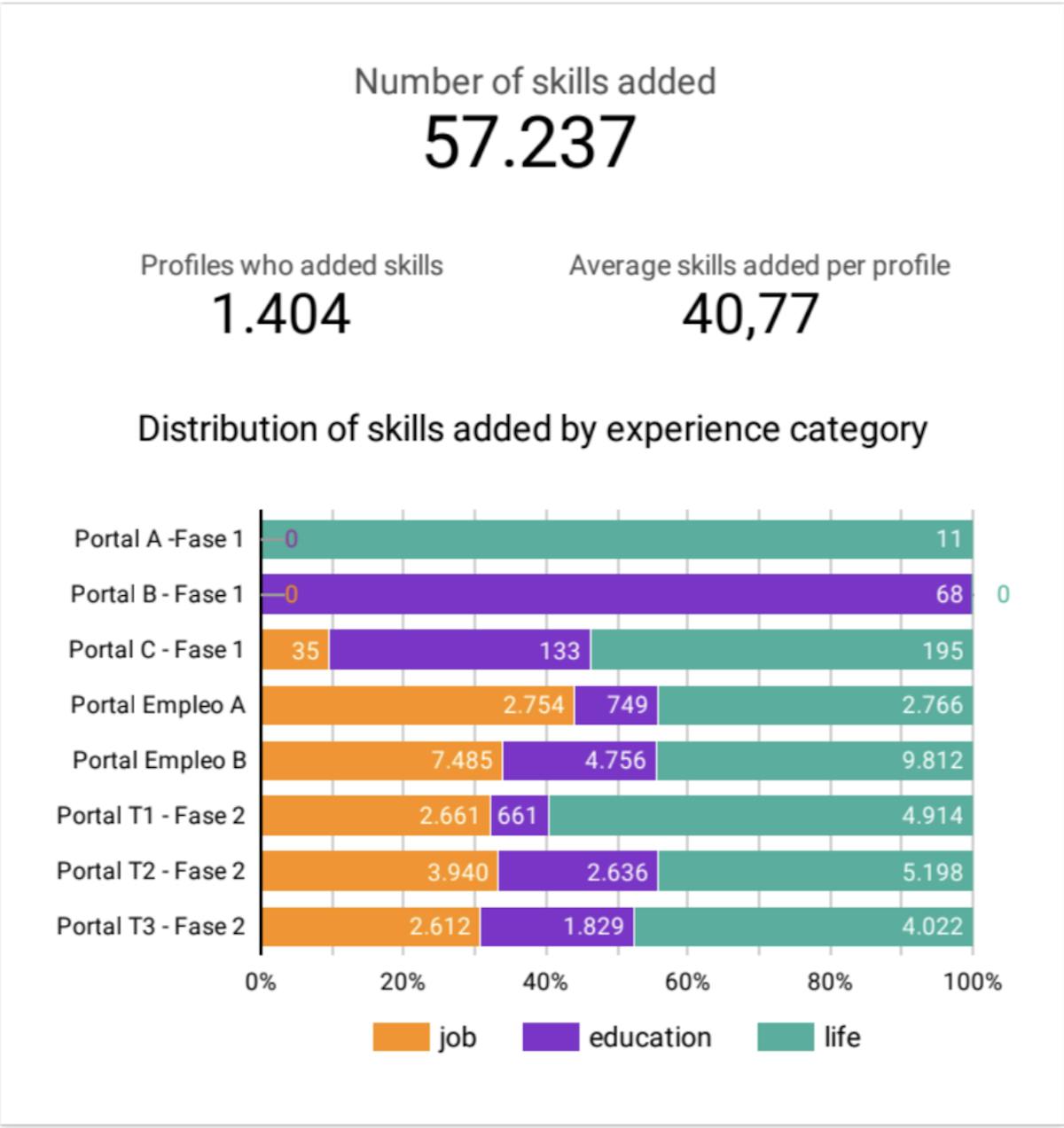
Skills distribution of the pilot participants recognized using the tool.
Uncovering "Hidden" Skills
Where trust and guidance were established, the results were transformative. The impact evaluation revealed that users who had full access to the SkillLab tool added roughly 50% more skills to their profiles compared to the baseline. This represents an average of about 8 additional skills per person—talent that would have otherwise remained "hidden" from employers. In total, the project helped users recognize and add over 50,000 new skills to their profiles. Many of these skills came from life experiences and informal work. We also observed that women were much more likely to include skills acquired through caregiving and informal roles, skills they might not otherwise recognize as such.
This success validates a core tenet of our Theory of Change: the talent is already there, but jobseekers often lack a framework to articulate it. By using our model to "interview" people about their life experiences, we helped them build market-ready CVs that truly reflected their potential.
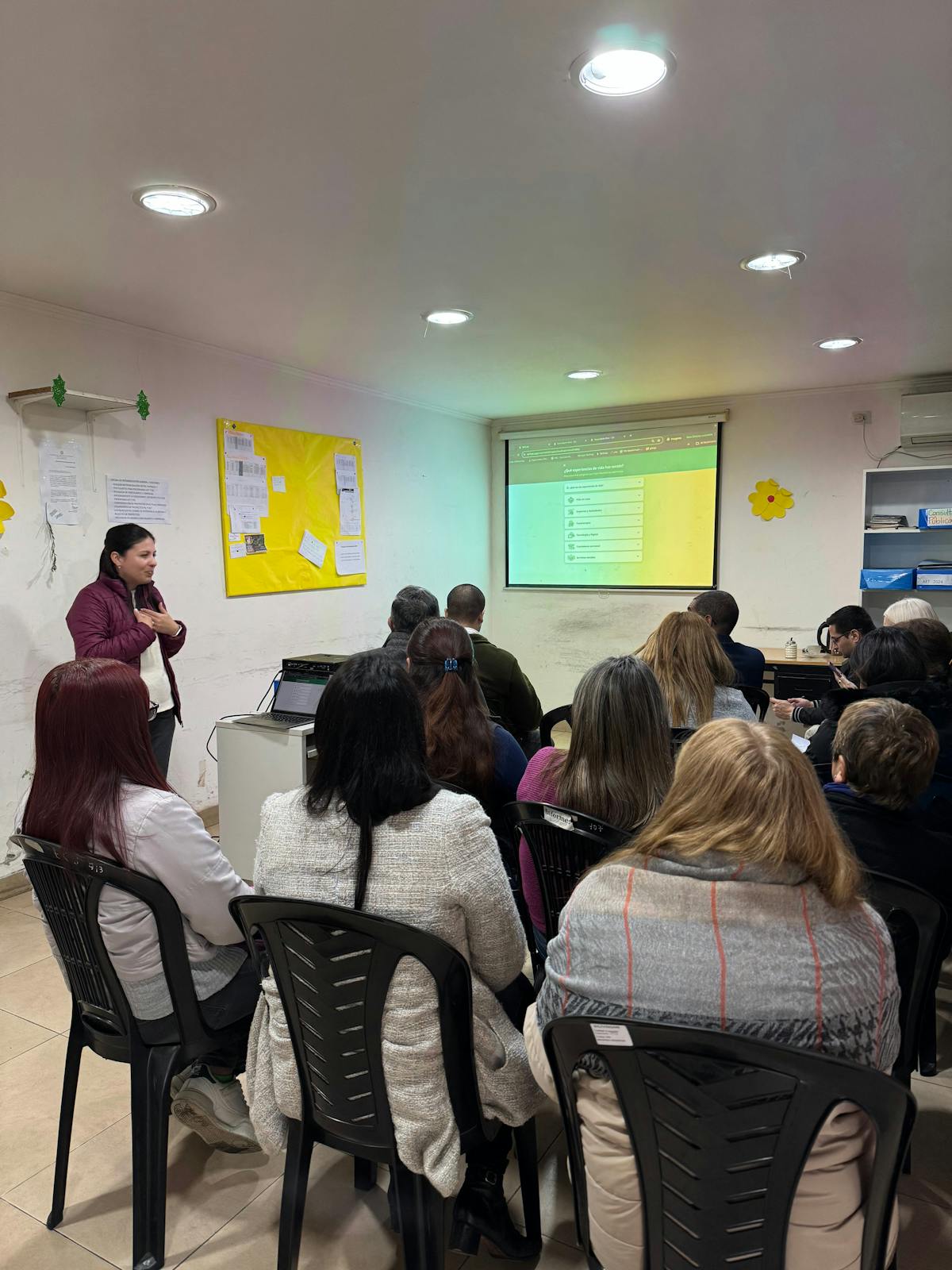
Training of employment office staff in Tucuman.
The Value of Human Guidance
The quantitative findings were strongly mirrored in the feedback from participants. Three quarters of the 201 users surveyed expressed satisfaction with the platform. Users specifically praised the tool's ability to identify skills associated with informal employment, with one noting, "The app is very easy to use and includes life experience, which I consider to be of greater importance". Similarly, 83% of employment office staff found the skills profiling feature to be one of the most valuable aspects of the pilot. They observed that jobseekers "usually only consider their formal jobs and overlook skills they may have acquired through daily life".
Crucially, the pilot underscored that technology performs best when coupled with a human touch. While the tool provides the framework, employment office staff highlighted that support is often needed to help users overcome digital barriers or access constraints. As one staff member articulated, "Participants needed help understanding the app. Once we sat with them and showed them how it worked, they got excited seeing their skills recognized". This synergy between institutional trust and digital innovation ensured that beneficiaries felt empowered rather than overwhelmed.
A Blueprint for the Region
While this chapter in Argentina has concluded, the project stands as a successful proof of concept. We integrated with national infrastructure, delivered a tool that works at scale, and proved that we can help people uncover their full potential.
We are leaving behind more than just software; we have empowered a network of local champions who understand the power of skills-based guidance. As we take these lessons to new projects across Latin America, we move forward with a reinforced conviction: To make a digital solution work for the labor market, we must first make it work for the people.
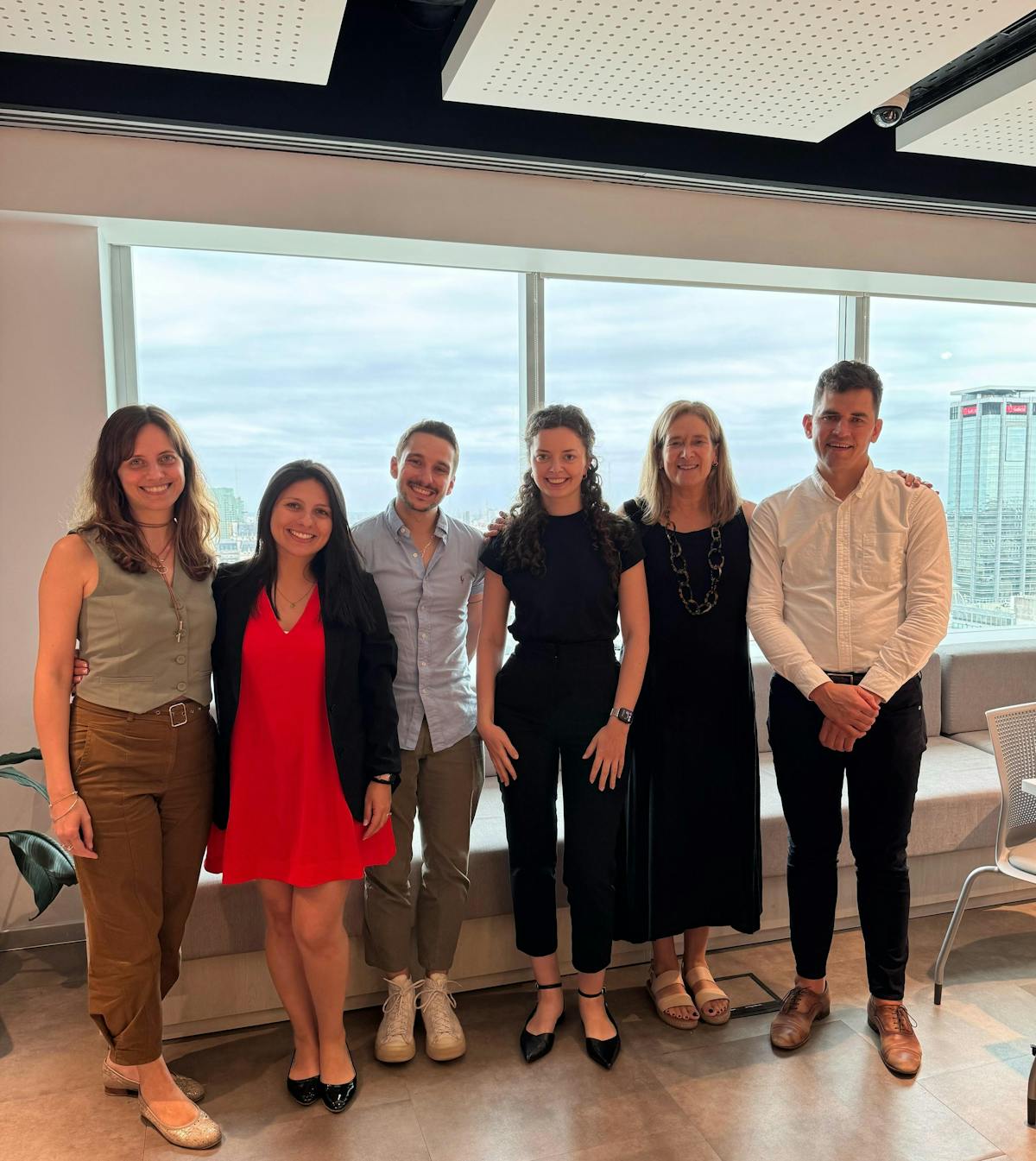
SkillLab team and World Bank team in Argentina.